
But please mind my words: the Beelitz Heilstaetten was one of the most popular abandoned places because there’s only a small portion left. In this blog post I’ll show you some “historical” photos from my visit in 2015 and 2018 and share, how you can visit the “remains of the remains”.
Table of Contents
Know Before You Go to Beelitz Heilstätten
Beelitz is a small town located halfway between Berlin and Potsdam in Brandenburg. It’s about an hour by car or train from either of the two cities. Beelitz Heilstätten is actually a wooded district in the north-east of Beelitz.
As of today you can visit a small part of the former military hospital complex. Specifically, buildings like the “Alpenhaus” that were preserved for the “Baumkronenpfad Beelitz-Heilstätten Baum&Zeit”.
Current Photos of the Baumkronenpfad Beelitz-Heilstätten Baum & Zeit
The “Alpenhaus” is one of the most impressive ruins there. The walk will take above the treetops around the building. The huge decayed building was a part of the hospital complex and heavily damaged during World War II. It was never restored.
During the past 70 years, nature started to take back the building, and a colossal forest grew on top of it. Allegedly, that’s the biggest rooftop forest in the world.
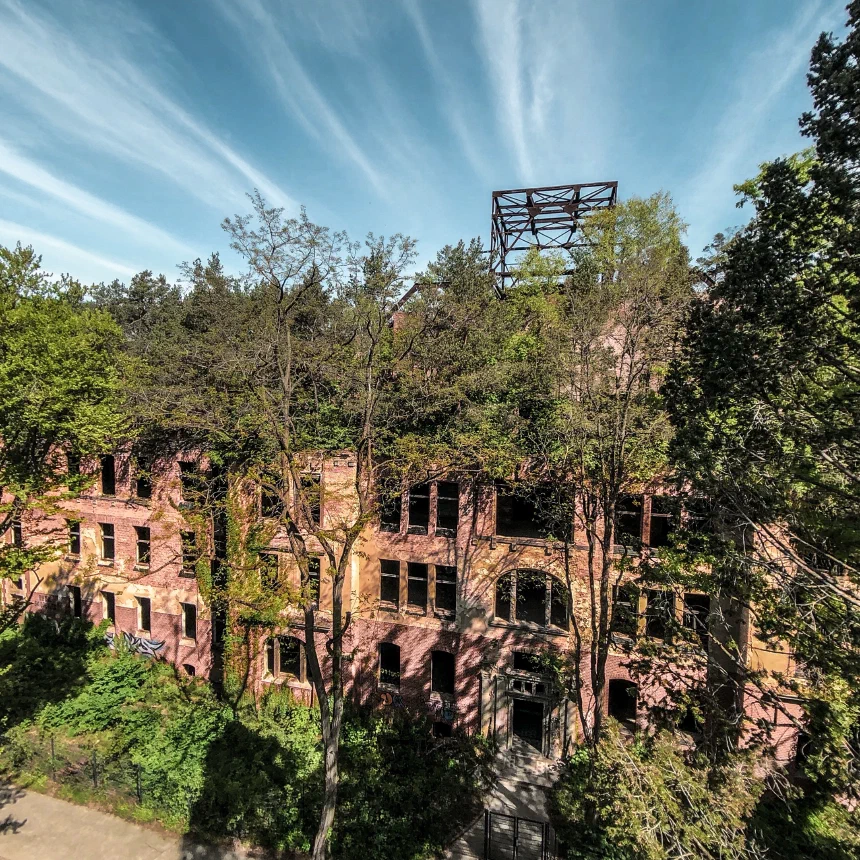
The canopy walkway is not long. It will take you maybe 15 minutes but the view of the decayed building with its rooftop forest is just spectacular, and you’ll get dozens of great photos there.
During one of my earlier photo trips to Beelitz when the canopy walk did not yet exist, I could get closer to the building and photograph it from the outside. Entering it was strictly forbidden. But the view from the canopy walk is even better.
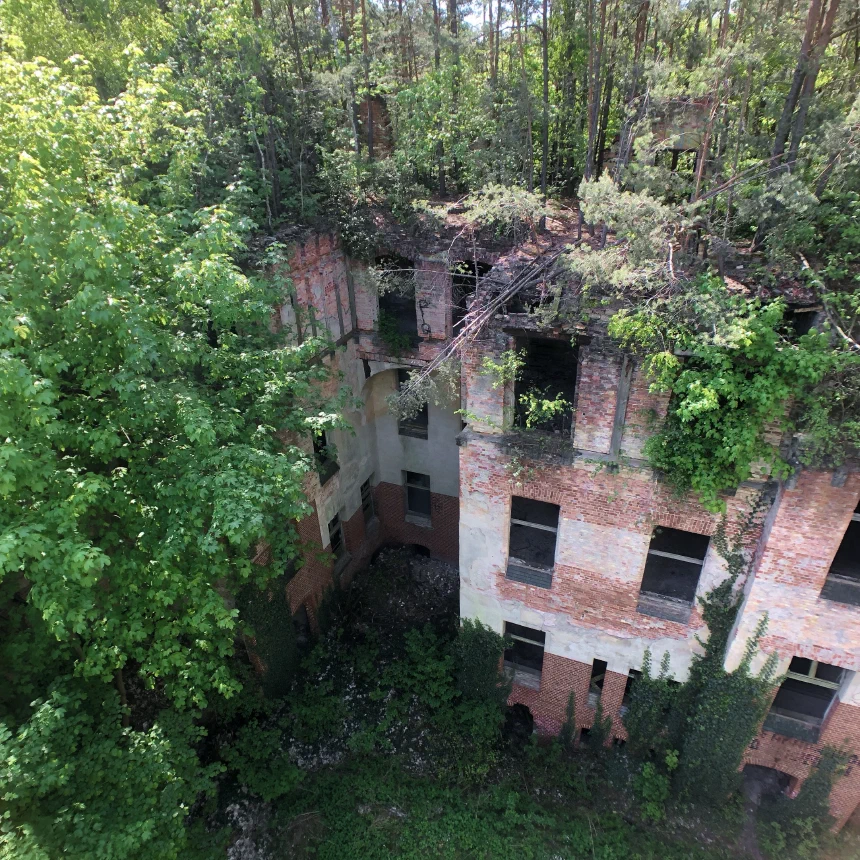
As I mentioned, the Beelitz Heilstätten was a vast area. Below, you can see some of the historical photos I took during my explorations before revitalization started.
Historical Photos of the Abandoned Hospital Complex in Beelitz from around 2015
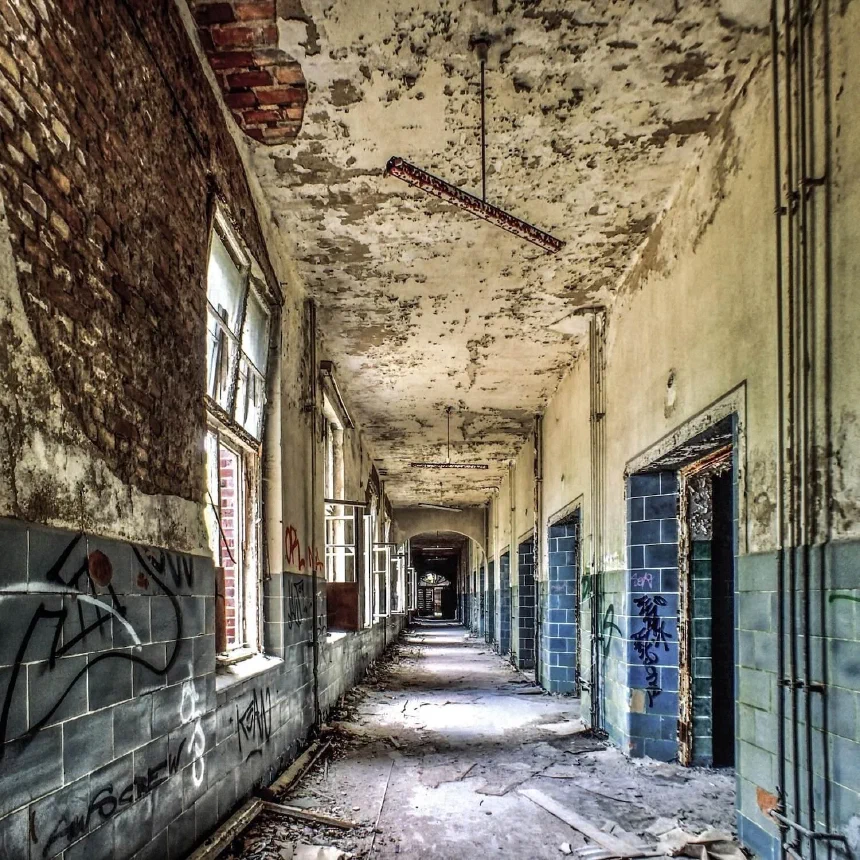
Long Corridors
The hospital complex consisted of about 60 buildings. Many of them were huge, long, three-story buildings. Inside I found dozens of huge corridors with either half open or completely missing doors, broken windows and sometimes difficult but interesting light to photograph.
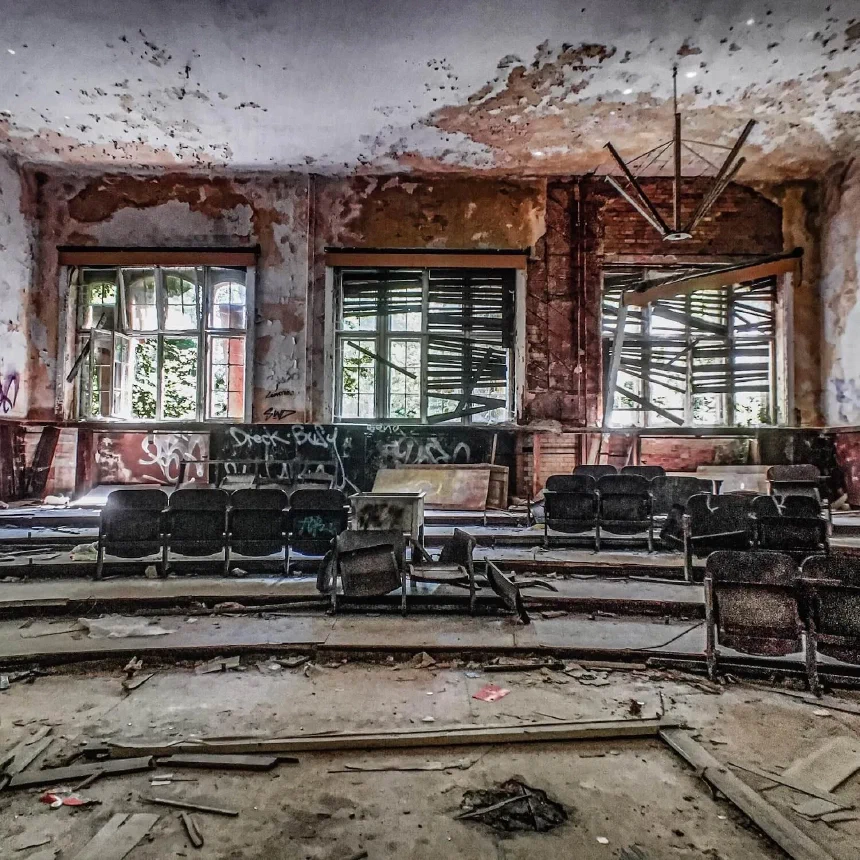
The Auditorium
There was not much left of the furniture at the Beelitz Heilstätten. Occasionally, I found a room that contained a few remains like this auditorium. It was used as a classroom for educating and training the staff.
Peeling Paint
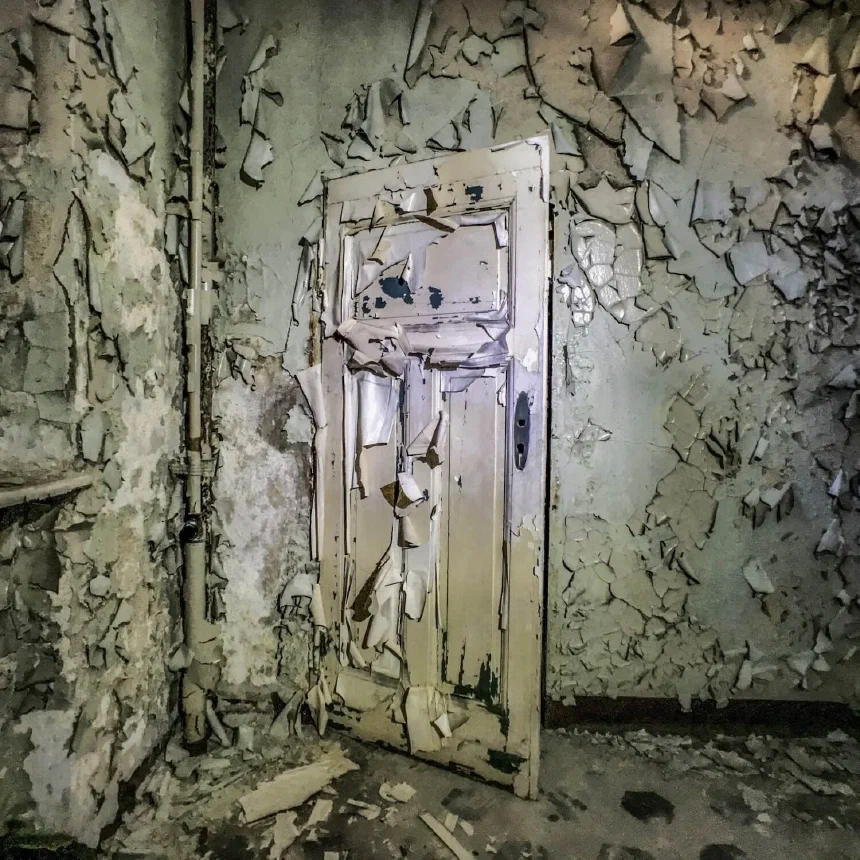
What I found cool and interesting to photograph at the Beelitz Heilstätten was the peeling paint that I saw on many walls, like in this dark corner of the famous Whitney Houston House. But don’t be misled. The famous Singer Whitney Houston never performed here. The house got its name from an art performance dedicated to the famous Singer.
Decaying Structures
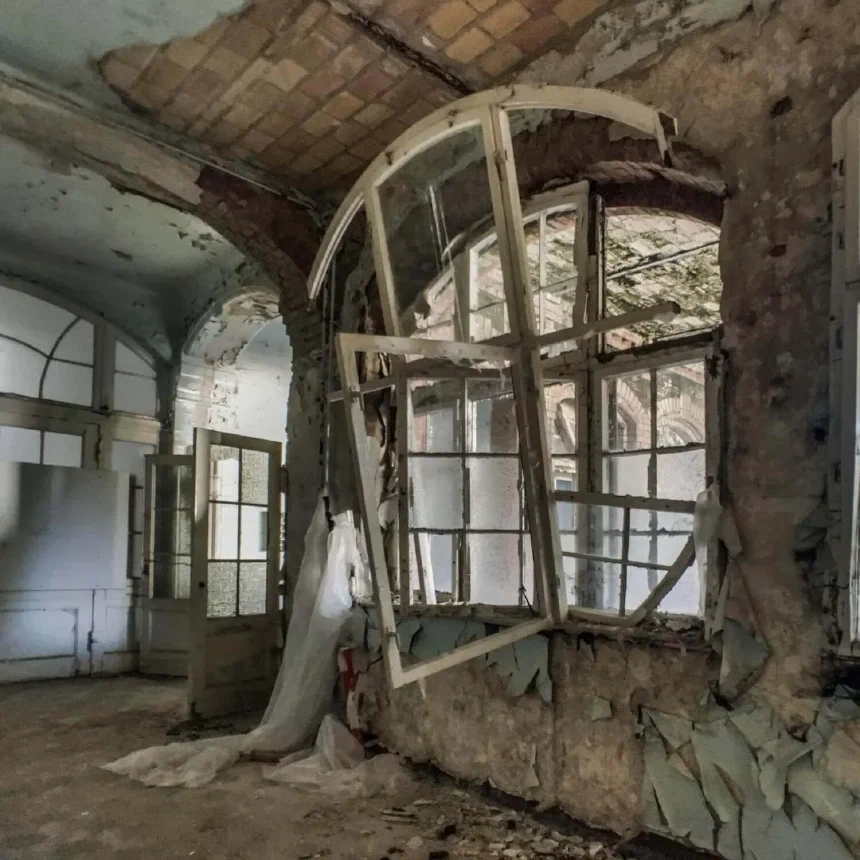
Though exploring such a huge abandoned place is fascinating and sometimes eerie, it’s also dangerous, like this window frame illustrates. It could fall off any time. So as a rule of thumb, when you enter a lost place: Always look up if there’s anything that could come down and do not try to open or close doors and windows.
Filming Location
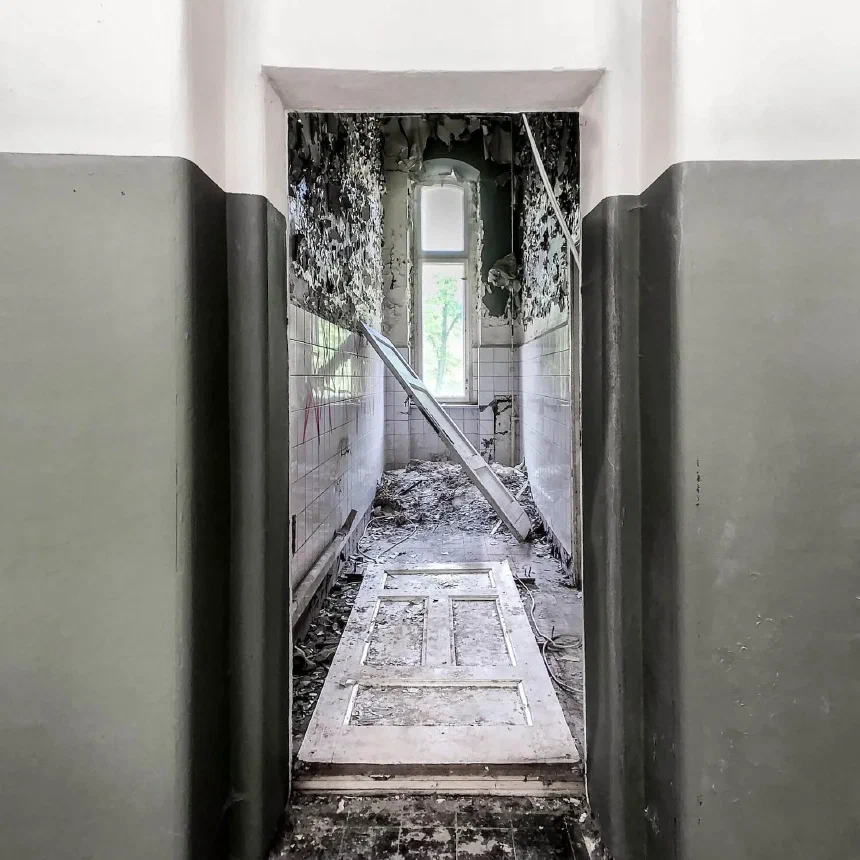
If the Beelitz Heilstätten was used as a filming location, the parts of the building that would be visible in the film were superficially renovated. But if you’d open a door, you’d still encounter the decaying rooms behind them (PS: Sorry for the door!). To see more photos of this set, please head to my blog post about the filming location of a Cure for Wellness.
Dark Areas
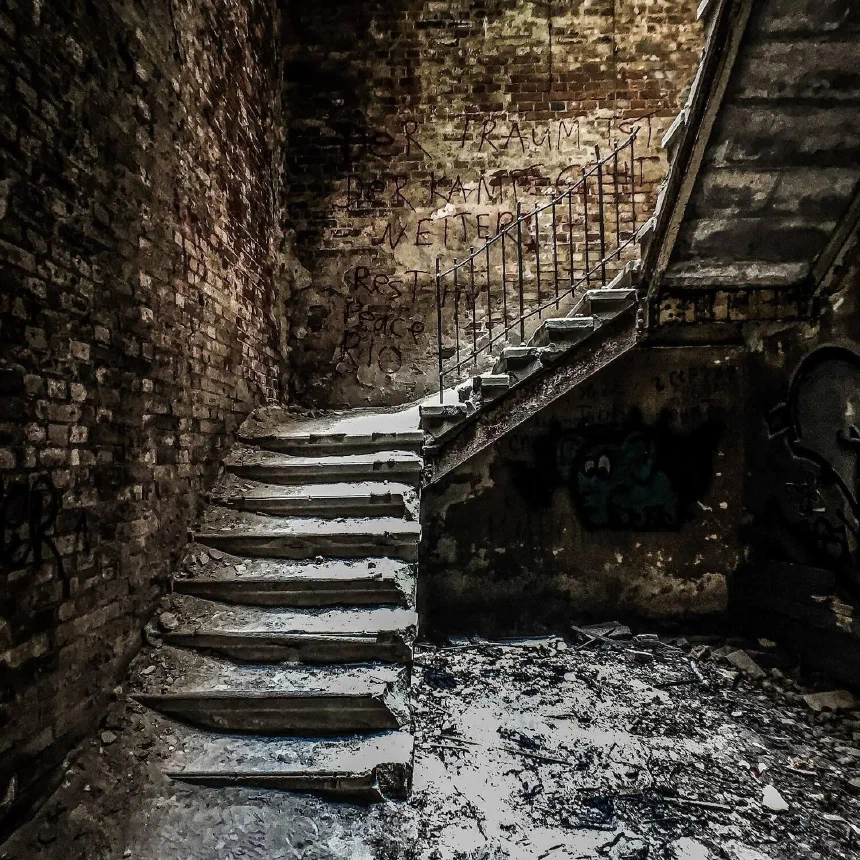
Each lost place has dark corners and rooms. So bring a flashlight to explore them and to take photos. Back then, I used flashlights from Olight to explore the Beelitz Heilstätten, but recently switched to a more powerful 12,000 lumens flashlight from Wuben. If you’re curious, please check my review of the Wuben X1 flashlight. But on the other hand, you may not need a flashlight for taking photos in a lost place, because the darkness and harsh shadows can be used to compose interesting photos.
Nice to Know About the Beelitz Heilstätten
How I Photographed at the Beelitz Heilstätten with My iPhone
During my trips to the Beelitz Heilstätten I photographed with different iPhone models: An iPhone X, an iPhone 6s plus and an iPhone 6. The camera apps I used back then do not exist anymore. I used ProHDR and PureShot. As the iPhone was not capable of taking RAW photos back then, I used PureShot to save the photos in the lossless TIFF format. Today, I’d definitely take RAW photos with my iPhone. To learn more about my iPhone photography apps and accessories I use to photograph in lost places, please head to my blog post about my recommended iPhone camera apps and recommended iPhone photo editing apps that I use.
About the History of the Beelitz Heilstätten
The Beelitz Heilstätten was opened in 1902 to treat lung diseases that were widespread back then. As the Beelitz Heilstätten were located in the pine woods of the Nuthe-Nieplitz Nature Park, the fresh and clean air was believed to accelerate the overall healing process. Then came the first world war, during which it served as a military hospital for the imperial German army.
Here’s a timeline with key historical milestones of the Beelitz Heilstätten:
Historical Timeline & Key Milestones
Why Are the Beelitz Heilstätten So Famous?
There are a few reasons why the Beelitz Heilstätten are so famous. The first one is obviously because it was one of the best known and larges lost places in Germany.
It’s also well-known for the historical personalities who were treated here; e.g. Adolf Hitler was treated here after the was wounded in World War I and Erich Honecker, a communist politician who served as the General Secretary of the Socialist Unity Party of Germany in the former GDR.
Lastly, the Beelitz Heilstätten were also famous as a filming location. Some movies and series filmed partially here were:
- Valkyrie (2008), starring Tom Cruise – watch Valkyrie on Apple TV
- A Cure for Wellness (2016) – watch A Cure for Wellness on Apple TV
- The Netflix series “1899” (2022)
Fun fact: There’s a German horror movie called Heilstätten, which is set at the Beelitz Heilstätten. But it was filmed at the Heilstätten Grabowsee because, at the same time, the Beelitz was already occupied by another film production. Of course, I also visited this filming location. Read more about it in my blog post about the abandoned filming location Heilstätte Grabowsee or watch Haunted Hospital - Heilstätten on Apple TV.
Is Beelitz Heilstätten Worth Visiting?
Yes, it’s definitely worth visiting Beelitz Heilstätten. Though many of the decaying buildings are no more, you can still get a feeling about how urban exploration felt at the Beelitz Heilstätten when I visited this well known lost place.
Head over to the official website to learn more about how you can visit the Beelitz Heilstätten today.
I’ve also published a blog post about other lost places in and near Berlin I’ve visited and that you can visit legally, too.
Discussion
0 CommentsComments are moderated, links are deleted. So don't even bother spamming.
Just one more step
Please enter your name and email address. Your email will never be published.